By the Founders of CheckCells,
December 6, 2025
CheckCells builds AI MD to understand biology and computationally diagnose at the cellular level. Our Semen and Microbiology products, AI for sperm selection and bacteriology, are proving grounds to train and trust cellular-scale intelligence.
Most diagnostics companies are structured around assays, workflows, or throughput improvements within existing laboratory systems. Their progress is measured in marginal gains: faster turnaround times, lower costs, incremental accuracy improvements.
CheckCells is organized around a fundamentally different question:
What kind of intelligence is required to understand biology at a cellular scale, consistently, quantitatively, and in real time?
This question determines every technical and strategic decision we make. We do not pursue automation because it is convenient. We pursue environments that force intelligence to confront biological complexity directly.
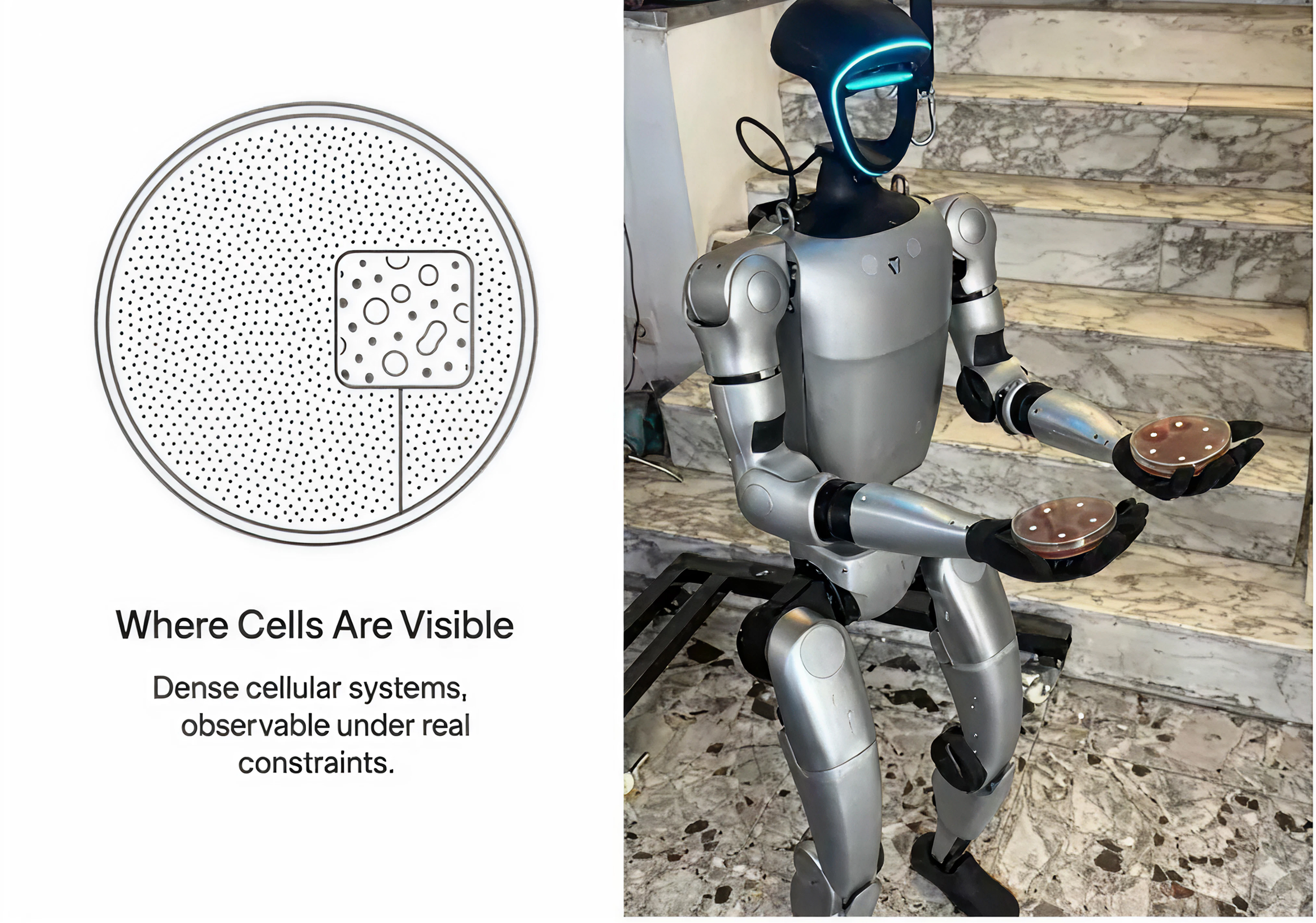
Microbiology is one of the few domains in medicine where dense cellular systems are both visible and measurable at scale. A single agar plate can contain thousands to millions of living cells expressing morphology, growth dynamics, and interaction patterns that interpreted under strict regulatory and clinical constraints.
Manual interpretation remains the standard despite well-documented variability between experts. This variability is not a human failure; it is evidence that the task exceeds the limits of subjective cognitive perception.
If an AI system cannot reliably interpret millions of bacterial cells under real-world conditions, it cannot credibly scale to more complex cellular systems. Microbiology is not chosen because it is easy. It is chosen because it is uncompromising.
Biology has historically relied on tacit human expertise, skills learned through experience and applied inconsistently under fatigue and time pressure. This approach does not scale to trillions of cells.
CheckCells develops machine perception capable of consistent cellular interpretation. Trained across millions of observations, AI systems apply stable criteria across time, environments, and institutions.
Once cellular understanding is encoded in software, it becomes reproducible, auditable, and distributable, an essential requirement for intelligence intended to operate at the scale of the human body.
'We live in an age where we can track a $10 pizza delivery across the city with meter-level precision, yet we have almost zero real-time visibility into the trillions of cells that actually keep us alive. This is the ultimate idiocy of our era: we have perfected the data of the trivial while remaining willfully blind to the data of our own survival. We have built a world where your smartphone knows more about your Uber's location than your doctor knows about your onset of inflammation.'
It is the great paradox of 2025: The global economy supports $37 trillion in valuation of AI & high tech companies, yet we possess no technology capable of performing a basic biological audit. We still cannot directly count the cells in a living human body, nor definitively distinguish how many of those cells are healthy, stressed, infected, or diseased.
This limitation is so deeply ingrained in modern medicine that it is rarely questioned. Yet, when viewed in the context of the technological world we inhabit, it represents a striking and consequential mismatch.
In daily life, people routinely know, with precision and in real time, how many dollars exist in their bank accounts, how many miles of range remain in their vehicle, how many square feet define their property, how many songs are stored in their playlists, and how many steps they have taken that day. These measurements are continuously updated, automatically collected, and universally trusted.
By contrast, the biological system that matters most, the human body, remains largely unmeasured even at the cellular level.
This gap does not exist because the problem is conceptually impossible. It exists because diagnostics - cost center for health systems, has historically evolved under constraints that no longer apply.
In 2001, sequencing the first human genome required a $3 billion budget, a 25,000 sq. ft. server farm, and 15 years.
In 2025, an M4 Max MacBook Pro has roughly 400% more memory than is strictly needed to sequence human genome in 5 hours, while running on battery power at a coffee shop.
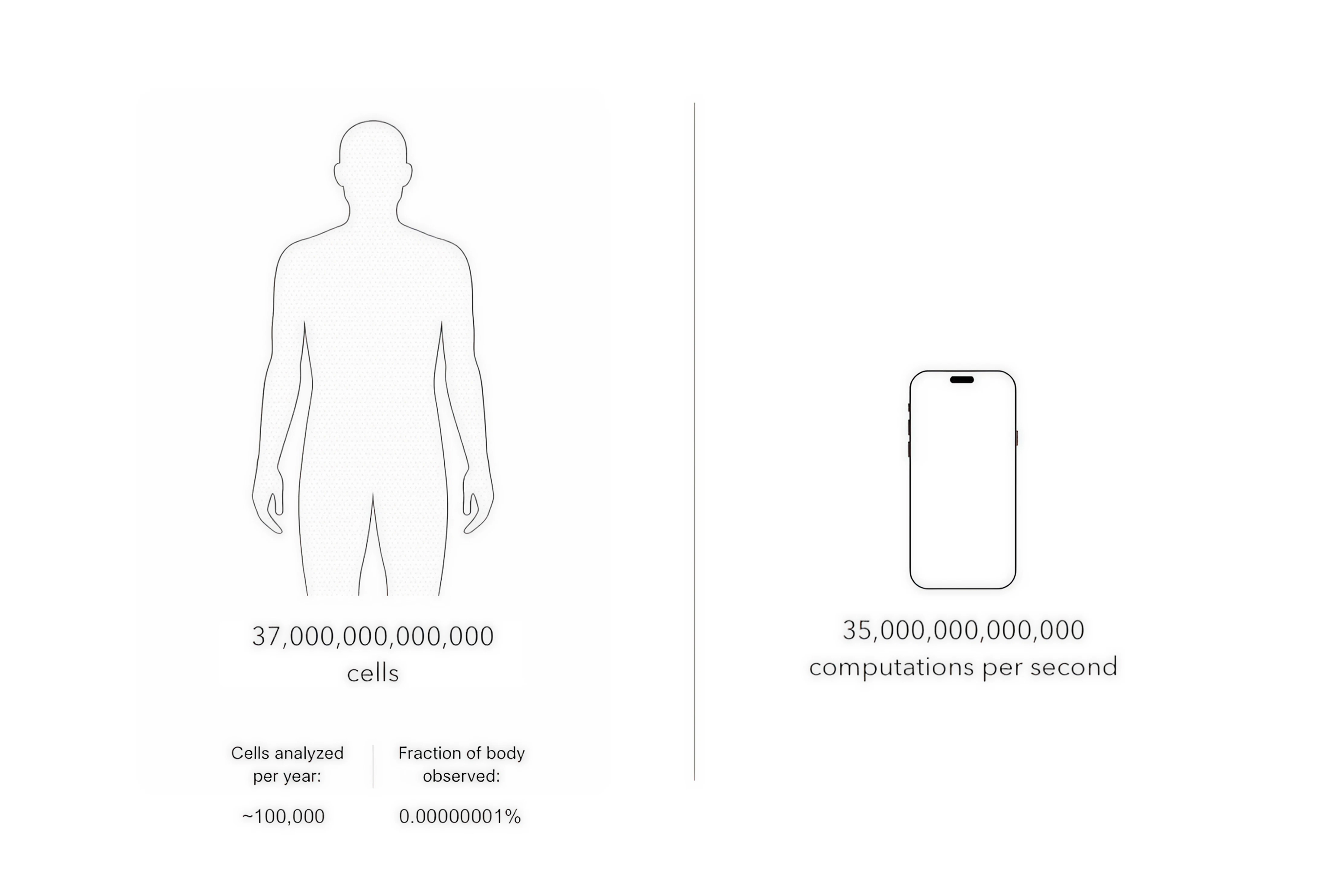
The devices people carry and use every day possess orders of computational capacity:
These systems continuously process visual data, sensor input, language, spatial reasoning, and control signals—often in real time and in safety-critical contexts.
Yet human diagnostics, in its most common form, remains strikingly sparse.
A routine laboratory health check may analyze on the order of ~100,000 cells per year for an individual. Relative to the estimated ~37 trillion cells in the human body, this represents approximately:
0.00000001% of the system.
This is not a marginal sampling problem. It is a fundamental mismatch between the scale of biology and the scale of observation.
That said, a major 2023 study from Johns Hopkins estimated that 371,000 Americans die annually due to misdiagnosis. This figure effectively ranks medical error as the third leading cause of death in the U.S., claiming significantly more lives than the drug overdose crisis.
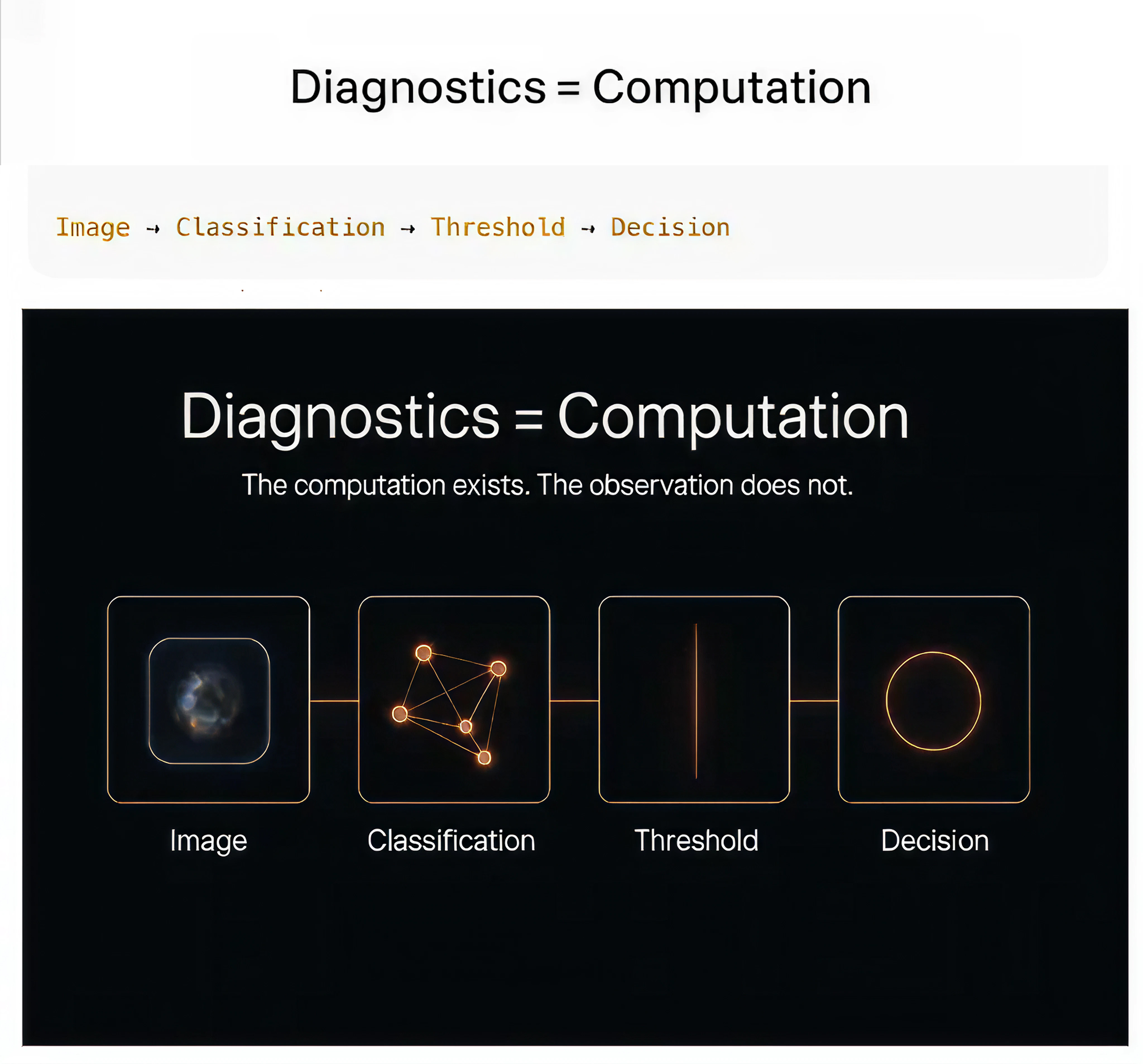
Importantly, diagnostics is not constrained by theory. It is constrained by instrumentation and workflow.
Modern diagnostics is already computational in nature:
Much of this process is already digitized, partially automated, or algorithmically assisted. What remains fragmented is the ability to observe biology at sufficient resolution and frequency, to physically interact with it at scale.
The result is a system in which extraordinary computational power exists everywhere except where biological intelligence is most urgently needed.
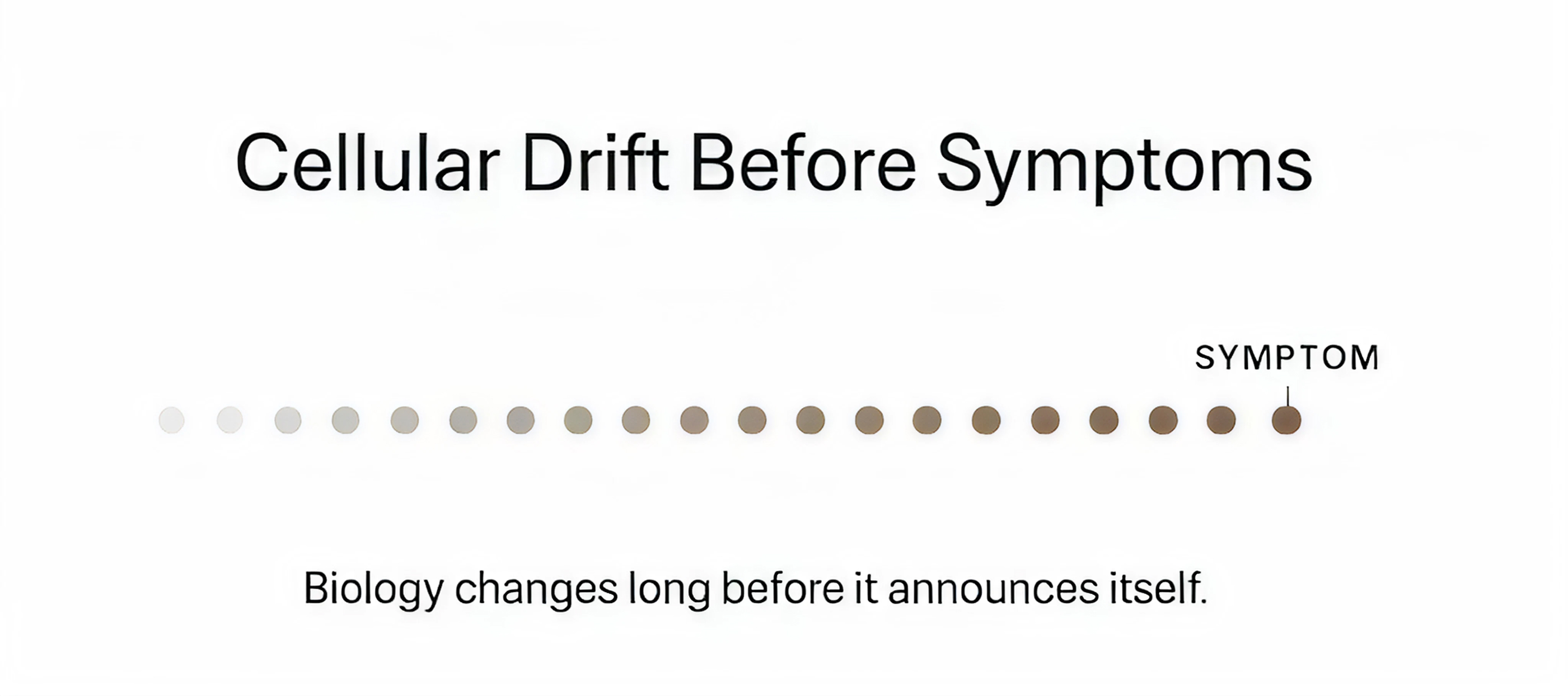
In 2025, we wait until billions of cells are malfunctioning (a visible tumor, a failed organ) before we label it a disease. Our current medical model is fundamentally reactive because our diagnostic tools are too "low resolution." To shift to true preventive care, we must be able to detect when only a few cells have gone rogue.
Biology does not fail catastrophically without warning. Cellular systems transition gradually: through stress, dysfunction, and early pathology, long before clinical symptoms emerge.
A diagnostic paradigm that samples a vanishingly small fraction of cellular state, infrequently and indirectly, cannot reflect the true dynamics of living systems. This is not a failure of clinicians or laboratories. It is a failure of technological alignment. We have normalized this limitation because it has existed for decades. But normalization does not make it acceptable.
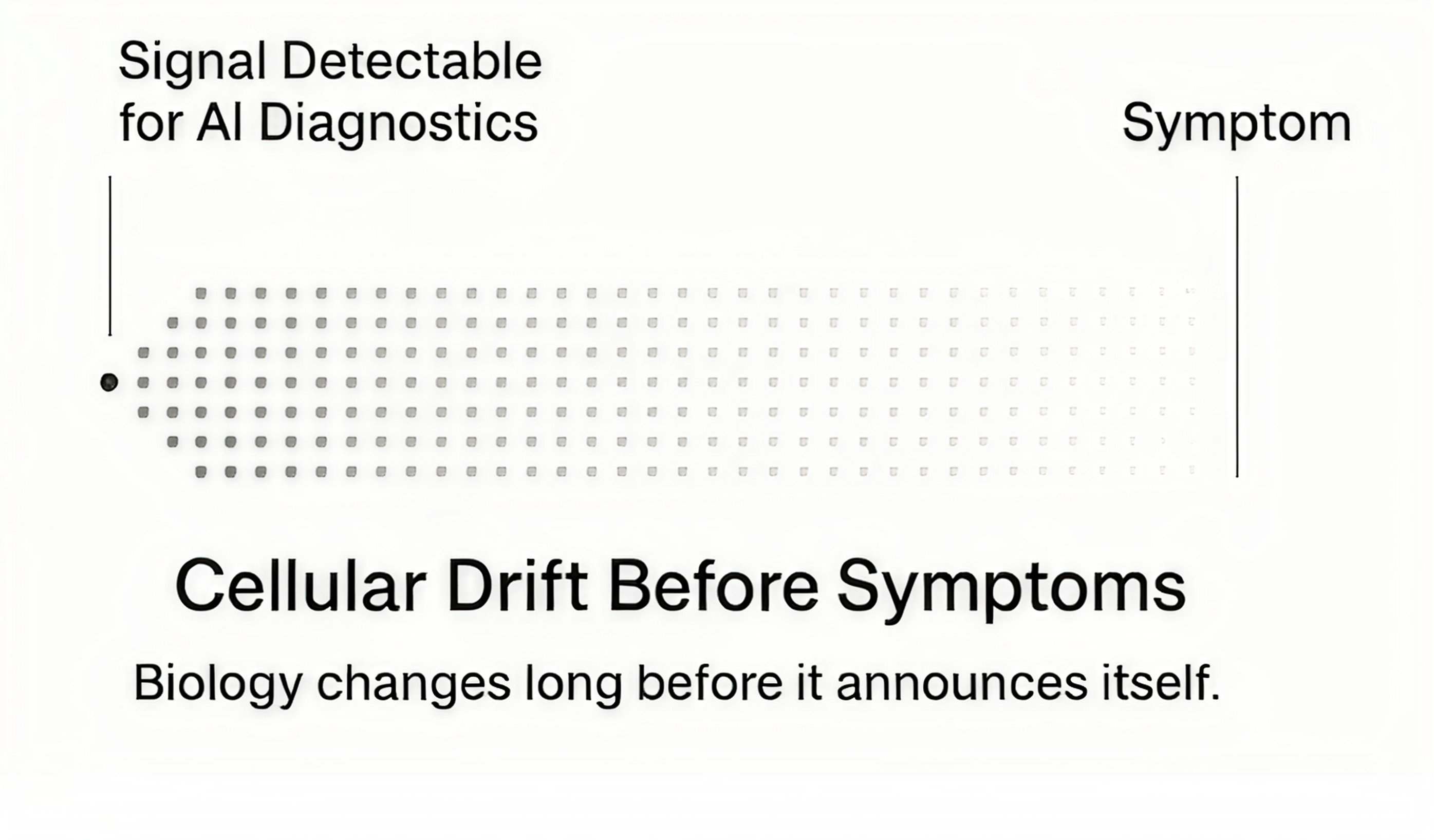
Closing this gap requires systems that can:
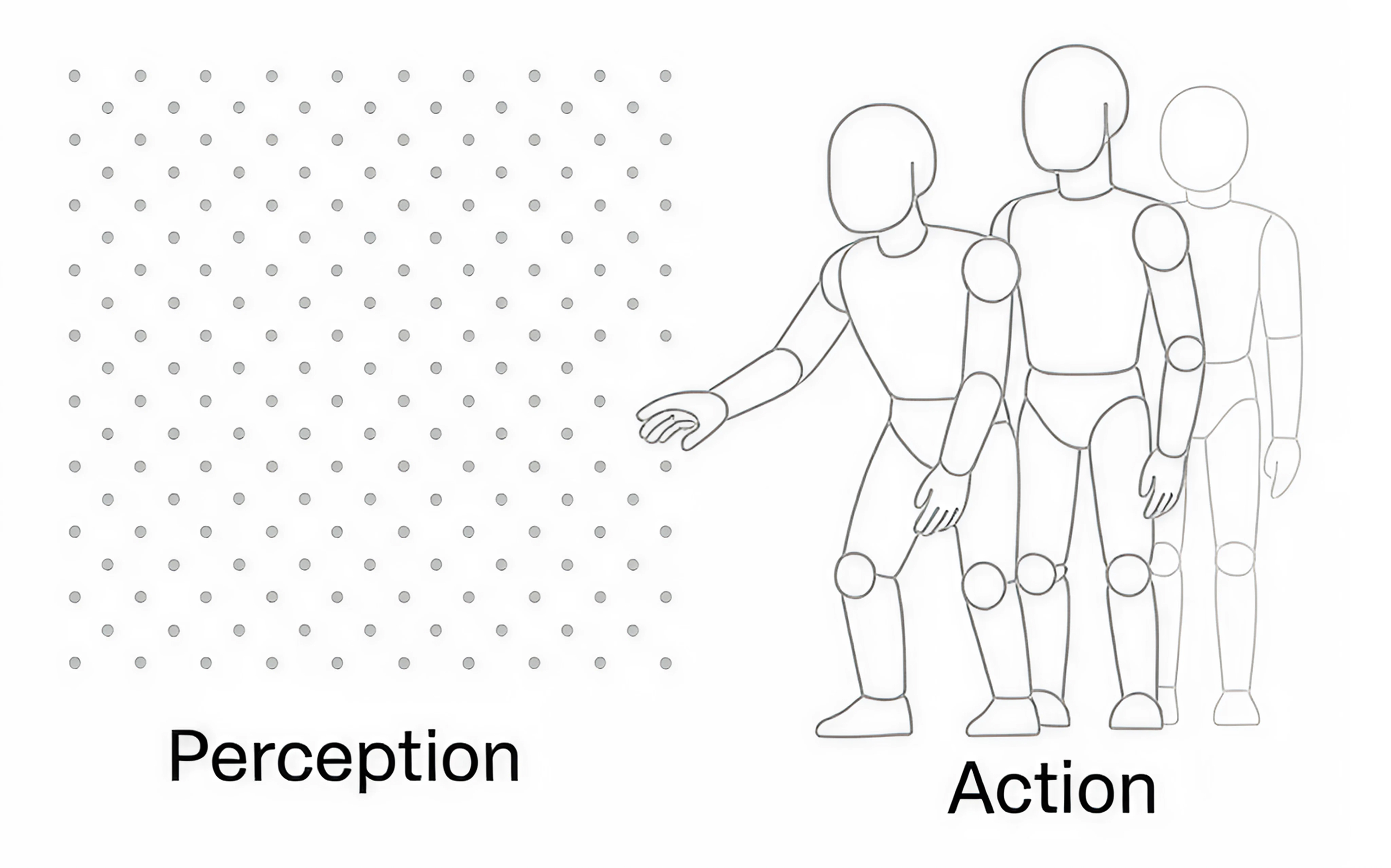
This is not achievable through incremental workflow optimization. It requires a platform shift with AI for consistent perception and robotics for consistent action, working together as integrated systems.
CheckCells is built around this recognition.
Our work in Microbiology is not an attempt to marginally improve diagnostics. It is an effort to develop intelligence and physical systems capable of operating at the scale biology demands.
Understanding 37 trillion cells is not an abstract ambition. It is a necessary correction to a technological imbalance that has persisted far too long.
The central question is no longer whether diagnostics can be automated further. We cannot practice 21st-century preventive medicine with 20th-century low-resolution tools.
The question is why, in a world saturated with real-time measurement and computational intelligence, the most important system we rely on, our own biology, remains effectively opaque at the cellular level.
We cannot practice 21st-century preventive medicine with 20th-century low-resolution tools.
Checking "all" Cells enables everyone to catch the "few" sick cells because disease is, by definition, a minority event at its origin. If we continue to average our biology, we will continue to miss the beginning of disease, locking us into a cycle of treating sickness only after it has already won.
To fully realize 21st-century preventive medicine, diagnostics must be able to Check [all] Cells beyond low-resolution, sporadic snapshots of biology.
The closer we get to high-resolution, longitudinal views of cellular states, the better we become at detecting the small, early deviations that precede overt disease, rather than reacting only after pathology is well established.
Check [all] Cells is the next logical application of modern technology to human biology, extending real-time measurement from our devices to our own cells. It marks a pivotal step in the evolution of medicine and computational biology toward more precise and preventive care.
Sources:
Get the latest news directly to your inbox.
Your data security is our priority. CheckCells is SOC2 and GDPR compliant, and our optional Zero Retention Mode ensures none of your content or data are retained on our servers. End-to-end encryption further protects data sent to and from our models.